Home › Story
Sakura Beach Story
Seiji is a daydreamer who spends a little too much time thinking about space. When his childhood friends offer him a week at the beach, all he can picture is clear skies and his telescope. He is about to learn that some plans are meant to be interrupted.
The premise
Sakura Beach opens with a simple setup. Seiji, a high school student with a head full of constellations, gets invited to spend a summer week at a seaside resort with his two childhood friends, Ayumi and Momoko. He accepts for one reason only: the night sky away from the city should be spectacular.
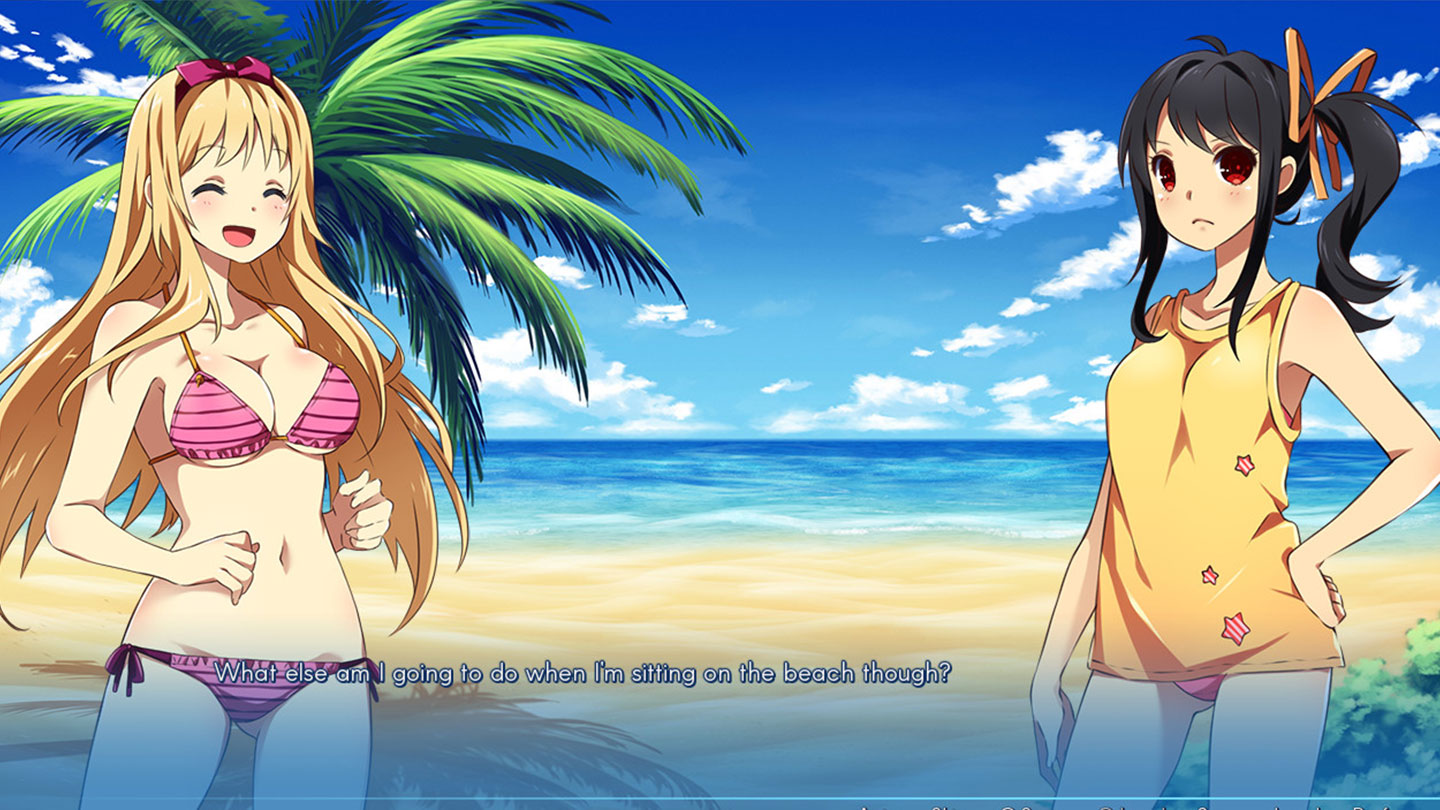
The girls, however, have not packed star charts. They have packed swimsuits, snacks and a very clear idea of how the week should go. From the moment the trio checks in, Seiji's astronomy plans start colliding with two much more social agendas.
Setting: a seaside town in high summer
The story unfolds in a small coastal resort town in modern Japan, during the hottest week of the year. There is a beach, a hotel with a pool, a boardwalk and plenty of chances for the trio to run into each other — deliberately or otherwise.
The setting does a lot of quiet work in the story. The beach gives the characters a reason to be close, the heat gives them an excuse to be relaxed, and the long summer nights give Seiji exactly the opening he keeps trying to use for astronomy.
The conflict: stars versus sunshine
The heart of the story is a comedic tug-of-war. Seiji keeps looking up; the girls keep pulling his attention back down to earth. Ayumi approaches the problem with teasing and mildly sharp comments, while Momoko simply refuses to take no for an answer.
What makes it work is that nobody is a villain. Ayumi's pride, Momoko's enthusiasm and Seiji's obliviousness are all played for gentle humor, and the story slowly nudges the three of them toward the conversation they have been avoiding.
Tone and pacing
Sakura Beach is a comedy first and a romance second. The writing leans on playful banter, misunderstandings and a protagonist who consistently fails to read the room. The pacing is deliberately relaxed: scenes breathe, jokes land, and the romance develops in small, believable steps rather than dramatic leaps.
The whole story is short enough to finish in a single sitting, which suits the tone. It is an evening story — light, warm and a little silly, with enough heart underneath to make the ending feel earned.
A complete story in one sitting
At roughly three hours, Sakura Beach never overstays its welcome. It tells a complete arc — a summer week, a change of heart, a choice — and then stops. Readers who enjoy the tone can follow the characters into the sequel, but nothing here requires it.
If you like visual novels that are short, funny and genuinely charming, this one belongs on your list. Just bring sunscreen: the girls are not going to let Seiji spend the whole week in the shade.